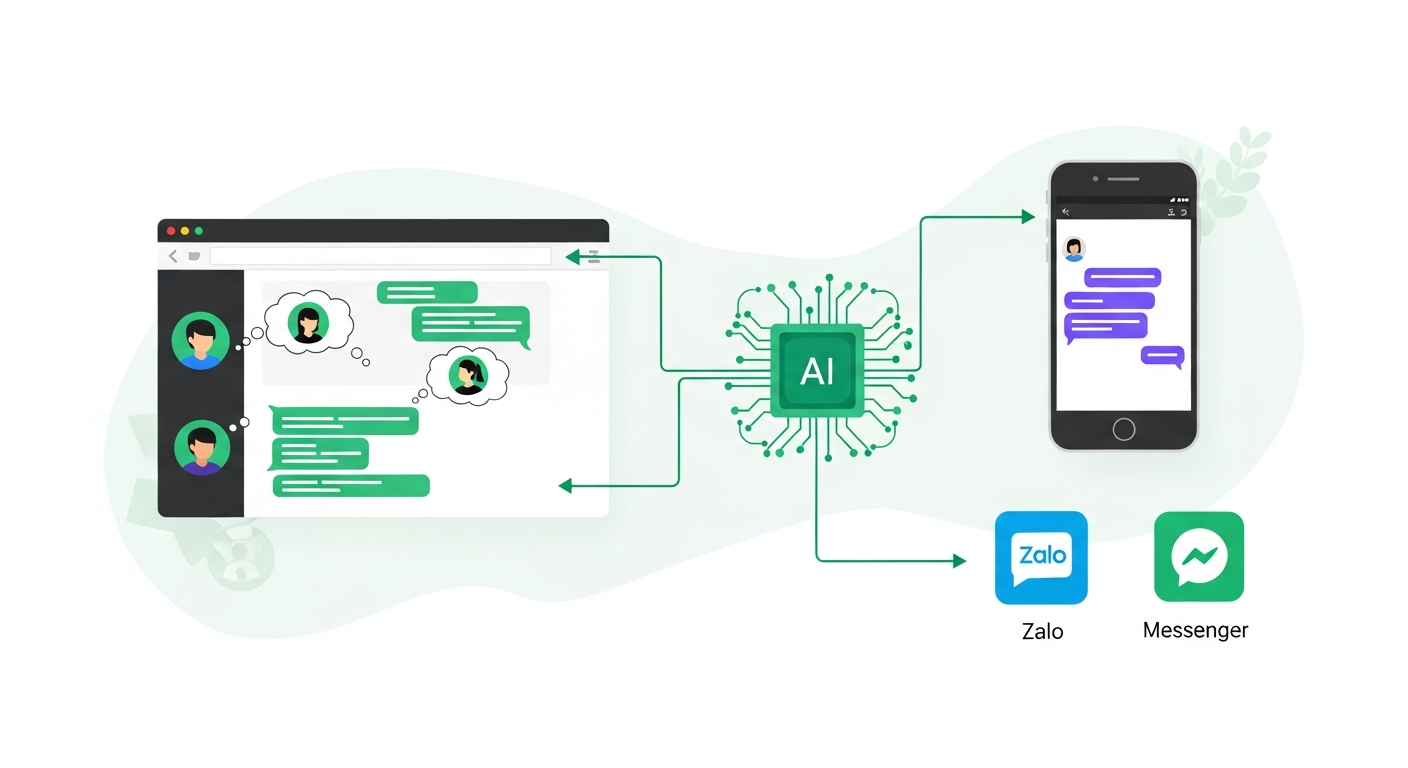
Customers today expect instant, personalized, and seamless communication—across websites, messaging apps, and social platforms. Traditional chatbots and manual support teams struggle to meet these expectations at scale.
This is where a conversational AI platform becomes essential.
A conversational AI platform enables businesses to engage customers through natural, human-like conversations powered by artificial intelligence. From lead generation and sales to customer support and internal operations, conversational AI platforms are transforming how organizations communicate and operate.
This guide will walk you through what a conversational AI platform is, how it works, its benefits, and how to choose the right platform for sustainable business growth.
What Is a Conversational AI Platform?
A conversational AI platform is a technology solution that uses artificial intelligence—such as Natural Language Processing (NLP), Machine Learning (ML), and Generative AI—to simulate human-like conversations across digital channels.
Unlike rule-based chatbots, conversational AI platforms can:
Understand user intent and context
Respond naturally in real time
Learn from interactions
Handle complex, multi-step conversations
They power interactions on channels like:
Websites
WhatsApp, Messenger, Zalo, Telegram
Mobile apps
Voice assistants
The goal is simple: create meaningful, efficient, and scalable conversations.
How a Conversational AI Platform Works
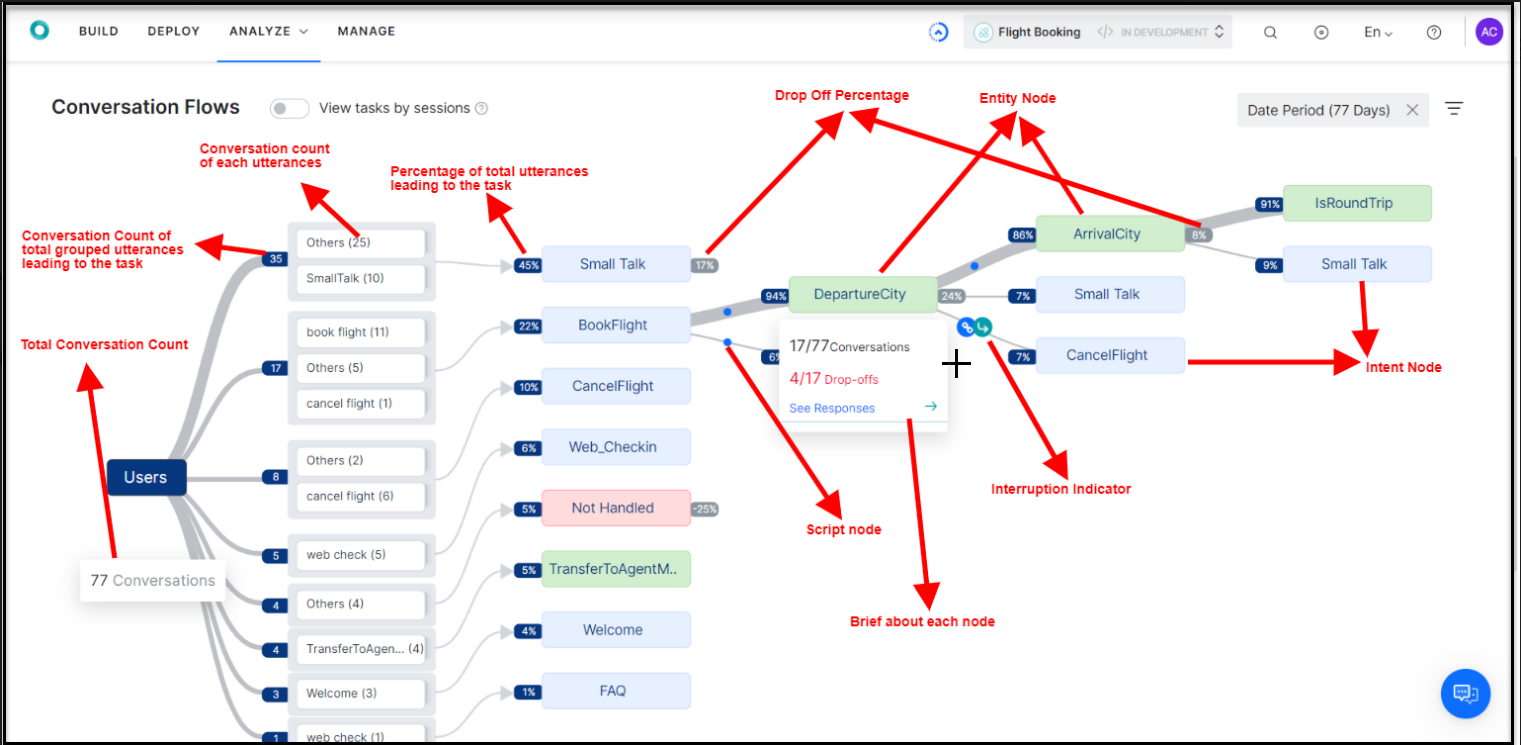
A conversational AI platform typically operates through these core components:
1. User Input
Customers interact via text or voice on their preferred channel.
2. Natural Language Understanding (NLU)
The platform analyzes intent, sentiment, and context behind the message.
3. AI Decision Engine
Based on data, rules, and learning models, AI determines the best response or next action.
4. Response Generation
The platform delivers a human-like reply, often enriched with buttons, links, or media.
5. Learning & Optimization
Every interaction improves future responses through continuous learning.
Key Benefits of a Conversational AI Platform
1. 24/7 Customer Engagement
Conversational AI platforms never sleep—customers get instant responses anytime.
2. Scalable Conversations
Handle thousands of conversations simultaneously without increasing headcount.
3. Improved Customer Experience
Human-like interactions reduce friction and increase satisfaction.
4. Higher Conversion Rates
AI guides users through personalized journeys—boosting lead capture and sales.
5. Operational Efficiency
Automate repetitive queries, freeing teams to focus on high-value tasks.
Conversational AI Platform vs Traditional Chatbots
Feature | Conversational AI Platform | Traditional Chatbot |
|---|---|---|
Language Understanding | Context-aware | Keyword-based |
Personalization | High (AI-driven) | Limited |
Scalability | Very high | Moderate |
Learning Ability | Continuous | None |
Use Cases | End-to-end automation | Simple FAQs |
A conversational AI platform goes far beyond basic chatbot functionality.
Common Use Cases of Conversational AI Platforms
🔹 Lead Generation & Sales
Qualify leads automatically
Book meetings and demos
Upsell and cross-sell products
🔹 Customer Support
Answer FAQs instantly
Resolve issues without human agents
Seamless handoff to support teams when needed
🔹 Marketing Automation
Engage users from ads and campaigns
Personalize follow-ups across channels
🔹 Internal Operations
HR onboarding bots
Internal knowledge assistants
Training and productivity agents
Conversational AI Platforms in Action

Modern platforms combine multiple capabilities into a single ecosystem. For example, InCard provides:
Multi-channel conversational AI chatbots
AI-powered lead capture and qualification
Sales, marketing, and customer success agents
Integration with CRM and automation tools
This unified approach allows businesses to manage conversations across the entire customer journey—from first touch to long-term retention.
How to Choose the Right Conversational AI Platform
When evaluating a conversational AI platform, consider:
✔ Channel Coverage
Support for website, messaging apps, and social platforms.
✔ AI Capabilities
Advanced NLP, contextual memory, and generative responses.
✔ Custom Training
Ability to train AI on your own documents and business data.
✔ Integration
CRM, helpdesk, analytics, and automation compatibility.
✔ Security & Compliance
Data privacy, access control, and regulatory compliance (GDPR, local laws).
Best Practices for Implementing a Conversational AI Platform
Start with clear use cases (sales, support, marketing)
Train AI with real customer data
Design natural conversation flows
Monitor performance and iterate
Blend AI with human escalation paths
Successful conversational AI platforms balance automation with empathy.
Conversational AI Platform for SMEs vs Enterprises
SMEs gain efficiency, faster response times, and lower costs
Enterprises gain scalability, advanced analytics, and system integrations
Conversational AI platforms are flexible enough to support both growth stages.
The Future of Conversational AI Platforms
The next generation of conversational AI platforms will focus on:
Emotion-aware AI conversations
Predictive and proactive engagement
Voice + text omnichannel experiences
Autonomous AI agents executing tasks end-to-end
As AI becomes more “human-aware,” conversational platforms will become central to digital business strategy.
Conclusion: Is a Conversational AI Platform Worth It?
Yes—more than ever.
A conversational AI platform enables businesses to communicate smarter, faster, and at scale while delivering superior customer experiences. It transforms conversations into data, insights, and revenue.
If your business values growth, efficiency, and customer-centricity, investing in a conversational AI platform is no longer optional—it’s strategic.
🚀 Ready to Transform Conversations into Growth?
Start leveraging a conversational AI platform today and turn every interaction into an opportunity.