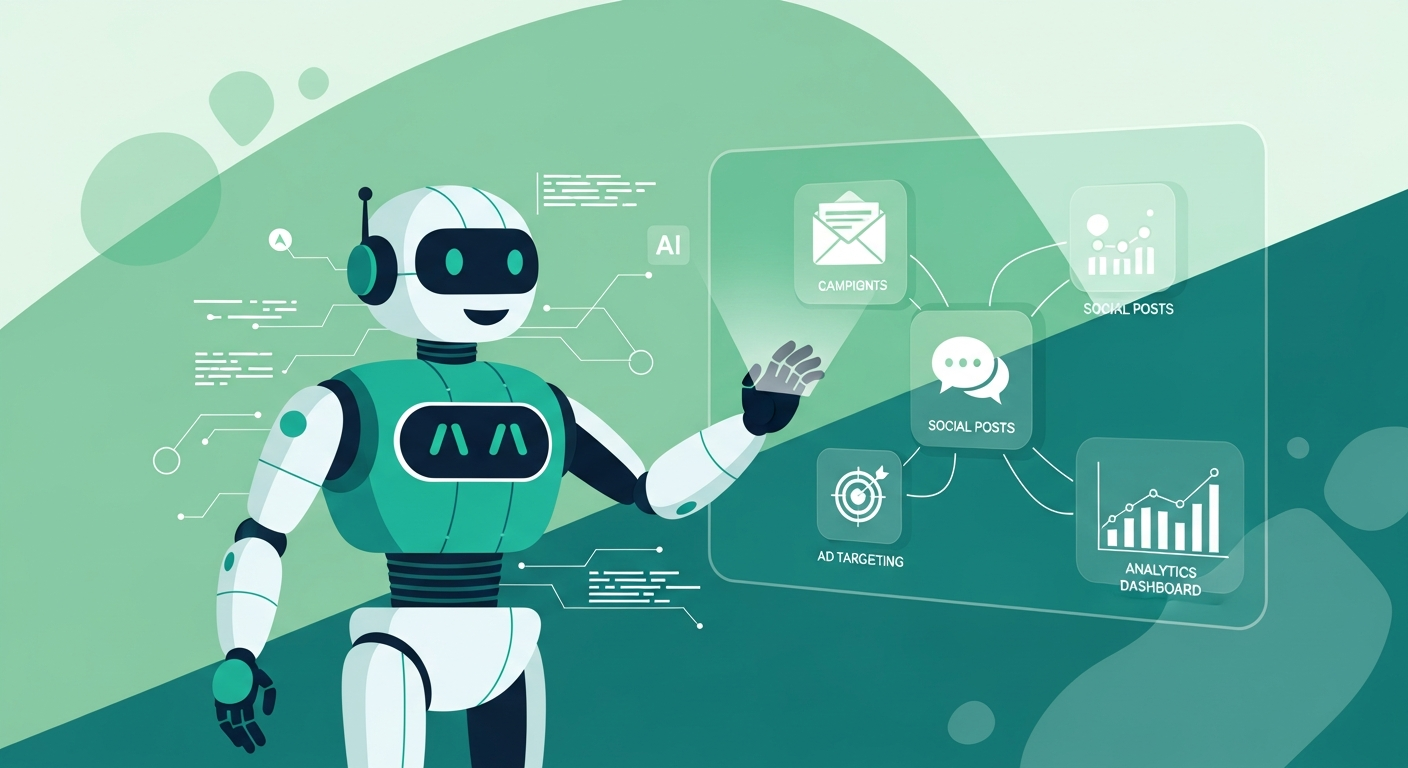
AI marketing automation is redefining how businesses attract, engage, and convert customers in the digital era. By combining artificial intelligence, machine learning, and automated marketing workflows, companies can deliver personalized experiences at scale while reducing manual effort.
As customer journeys become more complex, AI-powered marketing automation enables data-driven decisions in real time, making it a critical growth driver for modern digital strategies.
What Is AI Marketing Automation?
AI marketing automation refers to the use of artificial intelligence technologies to automate, optimize, and personalize marketing activities across multiple channels. These systems analyze user behavior, intent signals, and historical data to execute marketing actions dynamically.
Core marketing functions enhanced by AI automation include:
Lead generation and nurturing
Customer segmentation
Email and content personalization
Campaign optimization
Marketing performance analytics
Unlike traditional marketing automation, AI systems continuously learn and improve over time.
Key Technologies Behind AI Marketing Automation
AI marketing automation platforms are built on several advanced technologies:
1. Machine Learning Algorithms
Machine learning models identify patterns in customer data, enabling predictive targeting and smarter campaign decisions.
2. Natural Language Processing (NLP)
NLP powers AI-generated content, chatbots, email subject lines, and sentiment analysis for customer interactions.
3. Predictive Analytics
Predictive models forecast customer behavior, such as purchase likelihood, churn risk, and lifetime value.
4. Customer Data Platforms (CDPs)
AI integrates data from websites, CRM systems, social media, and ads to create unified customer profiles.
How AI Marketing Automation Drives Digital Growth
AI marketing automation accelerates growth by optimizing every stage of the marketing funnel:
Awareness: AI identifies high-intent audiences and optimizes ad targeting
Engagement: Personalized content adapts to user behavior in real time
Conversion: AI triggers timely offers and follow-ups
Retention: Predictive insights reduce churn and increase loyalty
This closed-loop optimization results in higher ROI and sustainable digital growth.
Benefits of AI Marketing Automation for Businesses
Organizations adopting AI marketing automation gain multiple advantages:
Hyper-personalized customer experiences
Reduced customer acquisition costs (CAC)
Improved marketing efficiency and scalability
Faster decision-making through real-time insights
Consistent omnichannel messaging
These benefits apply across industries, from eCommerce and SaaS to finance and healthcare marketing.
Common Use Cases of AI Marketing Automation
AI marketing automation is widely used in:
Automated email marketing and drip campaigns
AI-powered chatbots and conversational marketing
Dynamic content and product recommendations
Social media scheduling and optimization
Marketing attribution and performance forecasting
Each use case demonstrates how AI enhances both creativity and execution.
AI Marketing Automation vs Traditional Marketing Automation
Feature | Traditional Automation | AI Marketing Automation |
|---|---|---|
Decision logic | Rule-based | Predictive and adaptive |
Personalization | Static segments | Behavioral and real-time |
Optimization | Manual | Continuous AI learning |
Insights | Descriptive reports | Predictive and prescriptive |
AI marketing automation shifts marketing from reactive to proactive.
How to Implement AI Marketing Automation Successfully
To maximize results from AI marketing automation:
Define clear marketing goals and KPIs
Centralize customer data across channels
Choose AI-enabled marketing automation tools
Start with high-impact workflows (email, lead scoring)
Continuously test, learn, and optimize campaigns
Successful implementation requires both data readiness and strategic alignment.
Challenges and Considerations
While powerful, AI marketing automation also requires careful management:
Data quality and privacy compliance
Model transparency and bias control
Integration with existing marketing stacks
Human oversight for creative and strategic decisions
Balancing automation with human expertise is essential for long-term success.
The Future of AI Marketing Automation
The future of AI marketing automation includes:
Autonomous campaign optimization
Real-time personalization at the individual level
Deeper integration with sales and customer success
AI-generated content tailored to user intent
As AI evolves, marketing automation will become more intelligent, predictive, and customer-centric.
Conclusion
AI marketing automation represents the future of digital growth by enabling businesses to scale personalization, optimize campaigns, and make smarter marketing decisions. Companies that adopt AI-driven marketing automation today will gain a competitive advantage in efficiency, customer experience, and long-term growth.