TL;DR
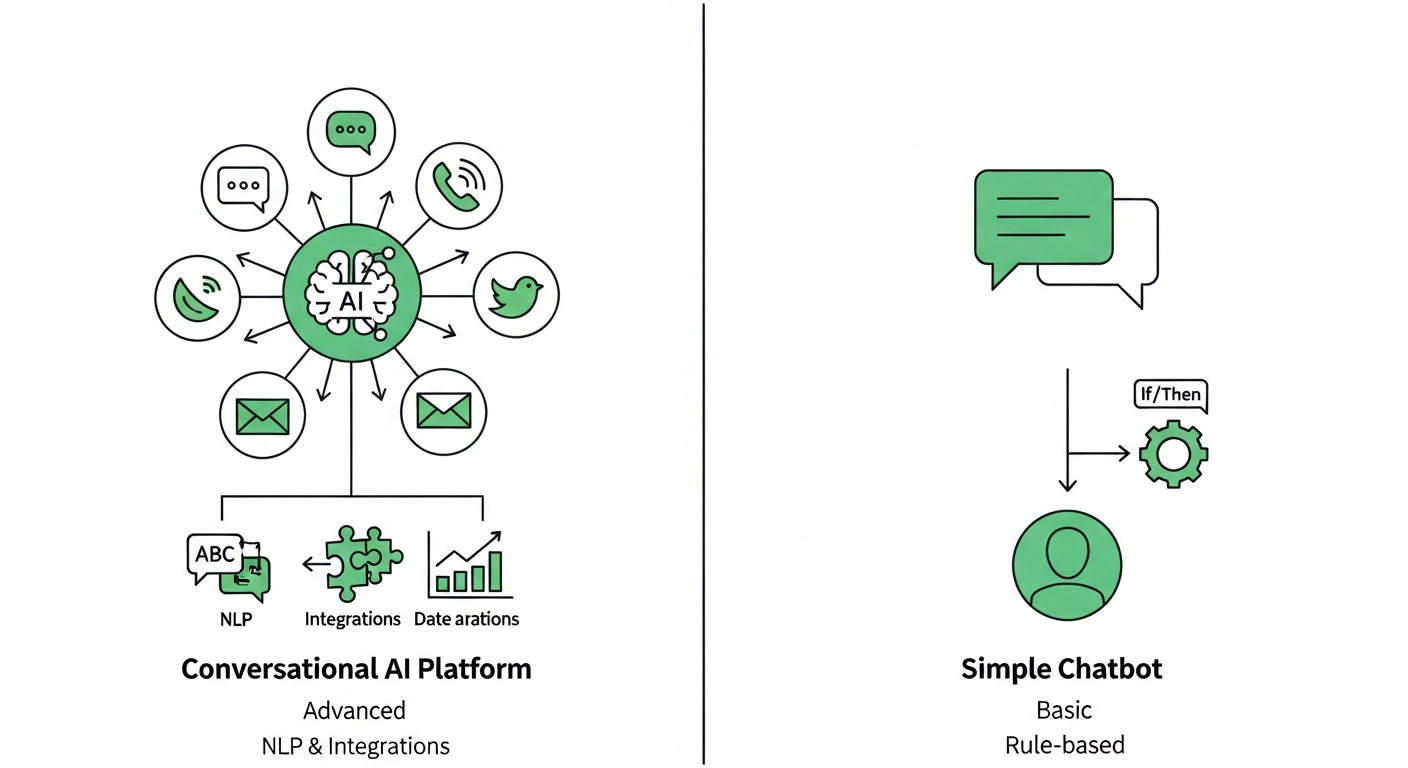
- A chatbot follows a fixed script — a conversational AI platform understands intent, context, and adapts its responses in real time.
- Key differences: chatbots handle FAQs; conversational AI handles complex multi-turn sales and support conversations.
- For SMEs, the right choice depends on your volume and complexity: high-volume FAQs → chatbot; complex sales qualification → conversational AI.
- InCard’s platform is conversational AI — it learns from interactions and improves close rates over time.
Many businesses believe they are “doing AI” simply because they have a chatbot on their website. At first, this may work—basic FAQs get answered, response time improves, and support tickets drop slightly.
But as customer expectations grow, a critical question appears:
👉 Is a chatbot really enough, or do you need a conversational AI platform?
Understanding the difference between a chatbot and a conversational AI platform is essential—especially if your goal is to scale sales, improve customer experience, and automate operations without increasing costs.
This article breaks it down clearly, practically, and from a business decision-maker’s perspective.
Chatbot vs Conversational AI Platform: Definitions
What Is a Chatbot?
A chatbot is a software program designed to respond to user messages based on:
-
Predefined rules
-
Keyword matching
-
Static conversation flows
Most chatbots are built to:
-
Answer FAQs
-
Provide simple instructions
-
Redirect users to pages or forms
They are easy to deploy—but limited.
What Is a Conversational AI Platform?
A conversational AI platform is a full ecosystem that uses:
-
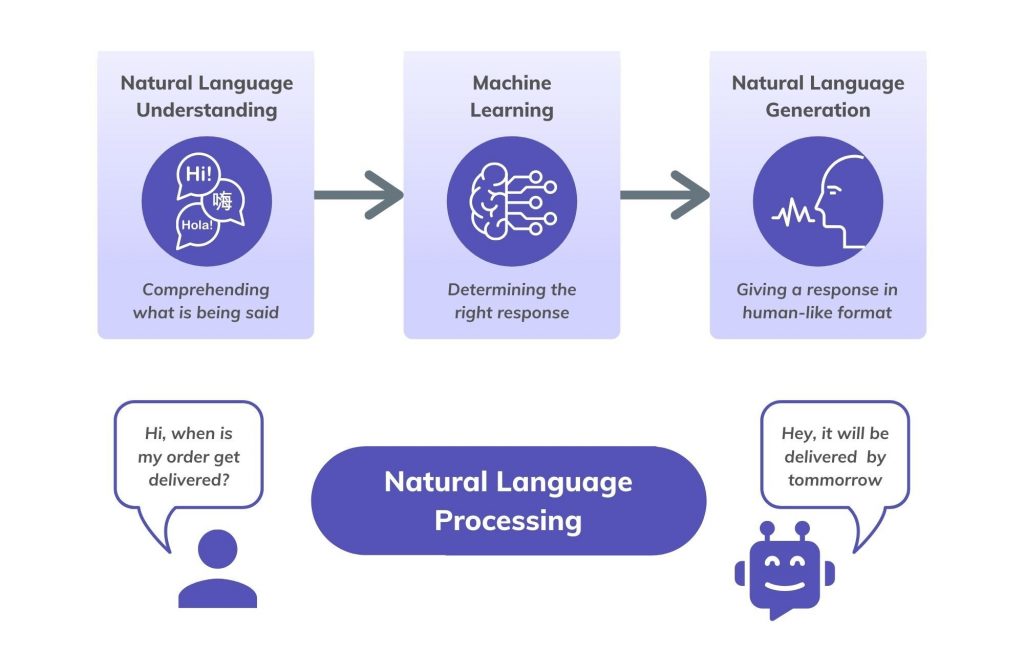
Natural Language Processing (NLP)
-
Machine Learning (ML)
-
Context awareness
-
Generative AI & AI Agents
It enables human-like, multi-turn conversations across multiple channels, deeply integrated with business systems like CRM, marketing automation, and analytics.
A conversational AI platform doesn’t just “chat”—it understands, decides, and acts.
Chatbot vs Conversational AI Platform: Detailed Comparison
|
Aspect |
Chatbot |
Conversational AI Platform |
|---|---|---|
|
Language Understanding |
Keyword-based |
Intent & context-aware |
|
Conversation Depth |
Single-turn |
Multi-turn, complex |
|
Learning Ability |
None |
Continuous learning |
|
Personalization |
Minimal |
AI-driven personalization |
|
Channels |
Usually 1 |
Omnichannel (Web, WhatsApp, Zalo, Messenger…) |
|
Lead Qualification |
Manual rules |
AI-driven scoring & routing |
|
CRM Integration |
Limited |
Native & deep integration |
|
Scalability |
Low–Medium |
Enterprise-ready |
|
Business Impact |
Cost reduction |
Revenue + CX + efficiency |
This difference is not technical—it’s strategic.
Chatbot Limitations: When a Chatbot Is No Longer Enough
Chatbots work—until they don’t.
Here are common chatbot limitations businesses face as they grow:
❌ Cannot Understand Context
If a user changes phrasing or asks follow-up questions, chatbots often break.
❌ Poor Lead Qualification
Chatbots collect data but cannot truly assess intent or readiness to buy.
❌ Rigid & Scripted Conversations
Users feel like they are “talking to a robot,” leading to frustration and drop-offs.
❌ Single-Channel Focus
Most chatbots are limited to websites and don’t unify conversations across channels.
❌ No Real Learning
Chatbots don’t improve unless manually reprogrammed.
If your business is experiencing these issues, a chatbot is no longer sufficient.
When Is a Chatbot Enough?
A chatbot may still be suitable if:
-
You only need FAQ automation
-
Traffic volume is low
-
No sales or lead qualification is required
-
No CRM or system integration is needed
For early-stage or static use cases, chatbots can be a temporary solution.
When Do You Need a Conversational AI Platform?
You need a conversational AI platform when your business requires:
✅ Sales & Lead Generation at Scale
-
AI qualifies leads automatically
-
Routes hot leads to sales instantly
-
Books meetings or demos
✅ Omnichannel Customer Experience
-
Website + messaging apps + social channels
-
Unified conversation history
✅ Context-Aware Conversations
-
AI remembers user intent and history
-
Personalized responses across sessions
✅ Automation Beyond Chat
-
CRM updates
-
Follow-ups
-
Task execution via AI agents
This is where conversational AI becomes a growth engine, not just a support tool.
Real-World Example: Platform vs Chatbot Approach
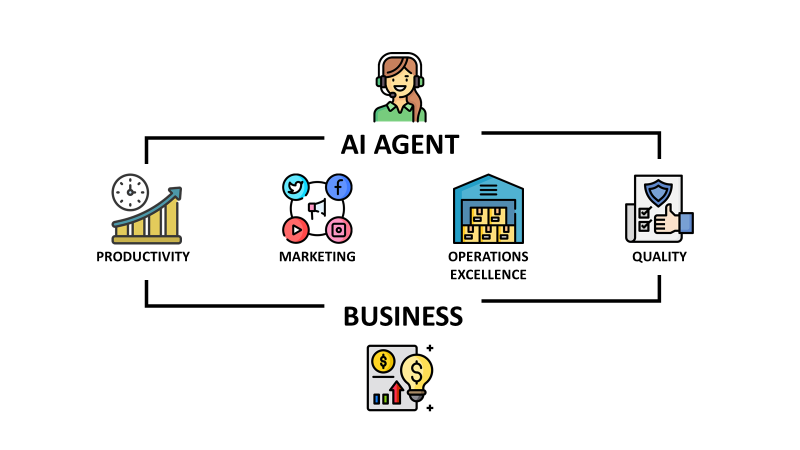
Modern businesses increasingly choose platforms over isolated chatbots.
For example, InCard enables businesses to move beyond basic chatbots by offering:
-
Conversational AI chatbots trained on business data
-
AI-powered lead generation and qualification
-
Multi-channel deployment (Website, WhatsApp, Messenger, Zalo…)
-
AI Agents for sales, marketing, and customer success
-
CRM and automation integration
This platform approach allows conversations to drive revenue and operations, not just answer questions.
Business Impact: Chatbot vs Conversational AI Platform
|
Metric |
Chatbot |
Conversational AI Platform |
|---|---|---|
|
Conversion Rate |
Low–Medium |
High |
|
Customer Satisfaction |
Inconsistent |
Consistently high |
|
Operational Efficiency |
Limited |
Significant |
|
ROI |
Tactical |
Strategic |
|
Long-Term Scalability |
Weak |
Strong |
This is why conversational AI platforms are increasingly adopted by SMEs and enterprises alike.
Which One Should You Choose?
Ask yourself these questions:
-
Do we need lead qualification and sales automation?
-
Do we operate across multiple communication channels?
-
Do we want AI to learn and improve automatically?
-
Do we need real business integration, not just chat?
If the answer is “yes” to two or more—a conversational AI platform is the right choice.
Once you know which category you need, use our guide to comparing AI platforms for the features and pricing models worth comparing.
Conclusion: Chatbot or Conversational AI Platform?
A chatbot is a tool.
A conversational AI platform is a strategy.
If your goal is simply to answer basic questions, a chatbot may be enough.
But if your goal is to scale revenue, customer experience, and automation—a conversational AI platform is the future-proof choice.