
A 20-room guest house: from a paper notebook to self check-in, in one week
No property management system, no front-desk staff, and an owner who is not comfortable with technology. This is the lowest starting point of any accommodation model InCard has built — and exactly why the design had to take things out rather than add them in. This page says what happens in the first week, what was deliberately left out, and roughly what it costs.
Design targets
Four numbers the system is designed to hit.
The first two are design thresholds. The two cost figures are estimates for exactly the configuration described on this page — a 20-room property, domestic guests, with the unnecessary parts stripped out. This is not a price list, and the real number changes with scope.
About the two cost figures: these are illustrative estimates for one specific configuration. They are not list prices and not a quotation. Official pricing by product group and term is on the Pricing page. The two time figures are design targets, not measured results. This page describes a solution model for small accommodation properties, not a results report from a named client.
The transformation journey
Starting from zero, and deliberately doing less.
Step 1
The challenge
A twenty-room property in an industrial province, with mostly Vietnamese guests arriving from booking channels and messaging apps. The owner does everything personally and has never used management software of any kind.
- No property management system. Bookings are written in a notebook and scattered through message threads.
- The owner has to be there for every arrival. Which means never going anywhere, and late guests waiting.
- Enquiries arrive after hours. Answer slowly and the guest books somewhere else.
- No view of the whole picture. Which rooms are free, what this month took, who has stayed before — all of it is memory or flipping through the book.
- Double bookings from manual management. Selling the same room on two channels has already happened.
- A small budget and a non-technical user. These are design constraints, not complaints.
Step 2
The solution
One principle throughout: anything added has to survive the question “will the owner actually use this themselves?” Anything that fails that question gets dropped.
Week one — the foundations
- Install OnePMS, a property management system with a Vietnamese interface, and load the room list, rates, photos and descriptions on the owner's behalf.
- Connect a channel manager so inventory across the booking channels updates together, instead of being edited in each place by hand.
- By the end of week one, the notebook has been replaced by a single place that holds the numbers.

An assistant to answer and guide bookings
- The assistant runs on the messaging channel Vietnamese guests actually use and on the website.
- It answers the questions that repeat: is anything free, how much, where are you, what is included.
- It reads availability and walks the guest through booking, then confirms back.
Self check-in, the stripped-down version
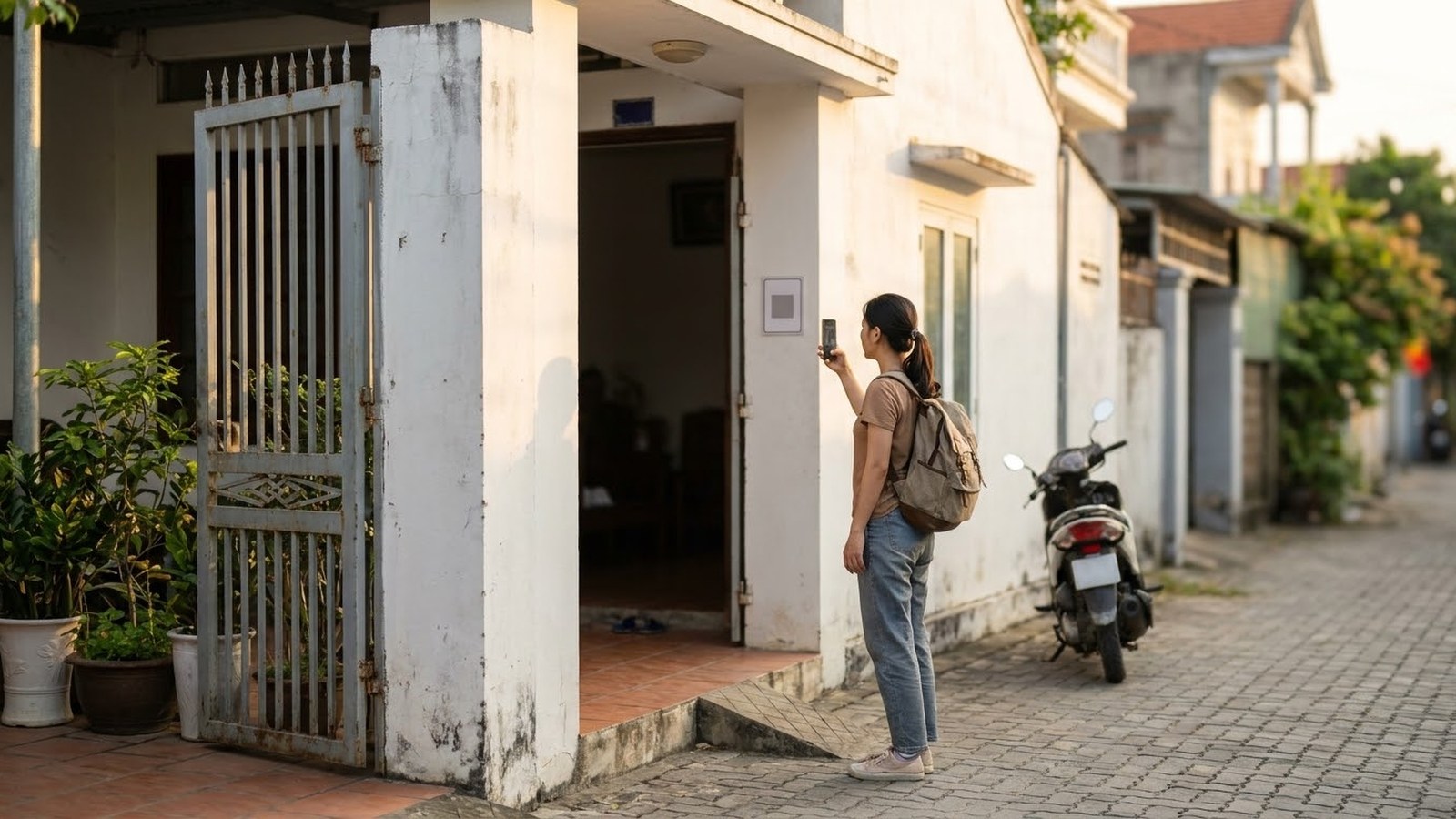
- On arrival the guest scans a QR code at the door to open a web app on their own phone.
- They enter the booking reference or the phone number used to book; the system matches it and lets them through.
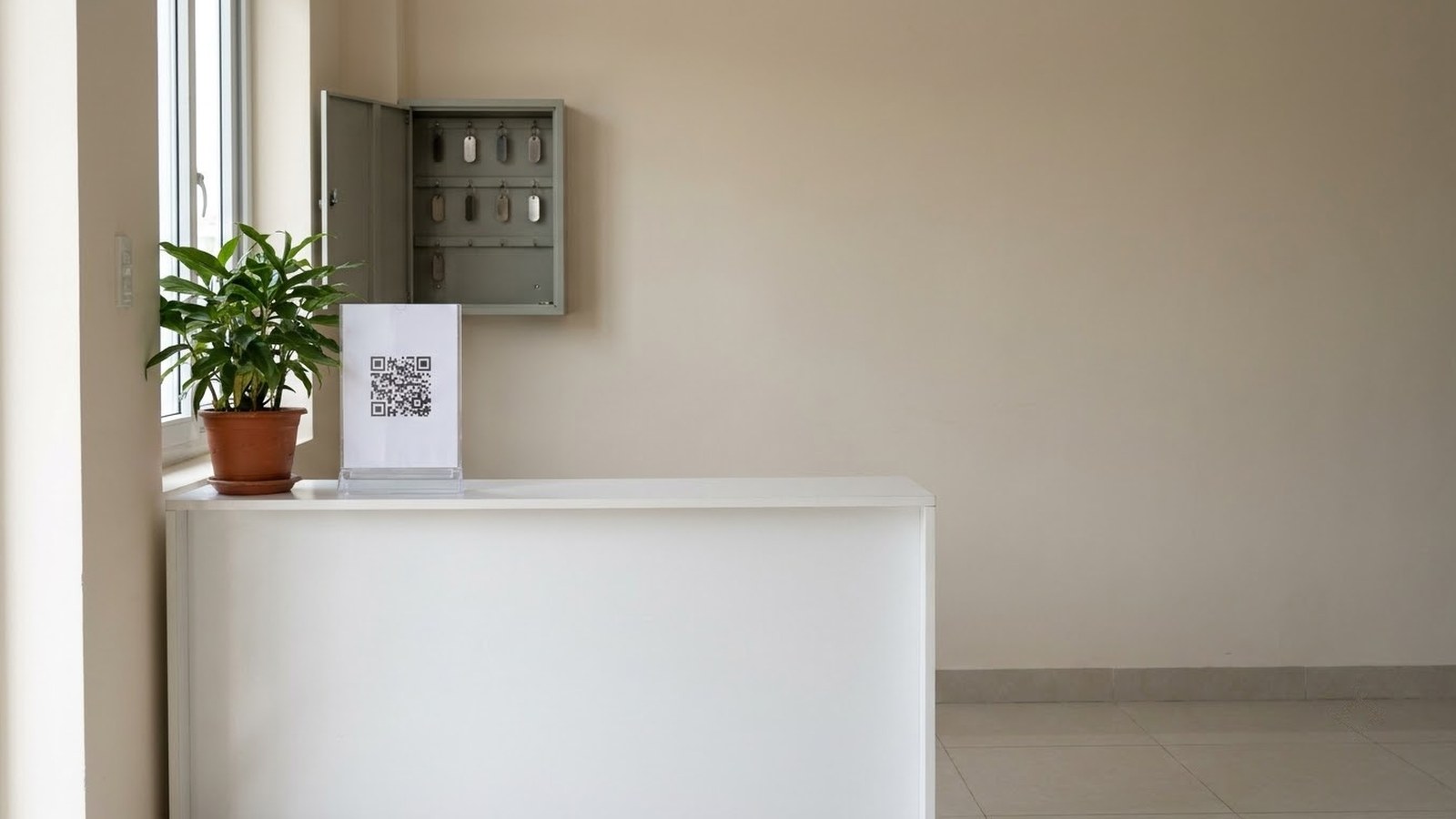
- The screen shows the room number, house rules and wifi password, and where to collect the key.
- The ID scanning step was deliberately left out. Guests are mostly Vietnamese and already hold a booking reference, so adding passport reading would cost money and lengthen the flow without solving anything. This is the single biggest saving — and also the trade-off, which the section below spells out.
One screen for the owner
- Bookings, check-in status and revenue all in the same place.
- A phone notification when a booking comes in or a guest checks in, so the owner does not have to open a computer to know.
Step 3
What this stripped-down version trades away
If you are going to do less, you have to know what you are giving up. These five need considering in advance, not discovering afterwards.
- No ID scan means no verification of who is staying. The system knows who booked, not who actually turned up. For a property taking foreign guests, this version is not enough and needs the document-reading step added.
- The guest-registration duty still applies. Registering guest details with the authorities is outside the scope of this version, so the owner still has to do it and should check against the rules currently in force.
- A physical key at a fixed point is a risk. The key box or counter needs clear rules: who may take one, when the combination changes, and what happens when a key goes missing.
- Channel sync still has lag. It reduces double bookings sharply; it does not eliminate them. Hold a buffer room on peak dates.
- A non-technical owner needs someone behind them. Installed is not finished. There has to be someone to call when it misbehaves, or in a few weeks everything is back in the notebook.
Step 4
Cost and operating targets
Read the cost section as a worked example you substitute your own numbers into, not as a price.
- Around fifteen million dong for the initial build. That covers installing the management software, loading the room data, connecting the sales channels, building the check-in flow and training the owner. The real figure moves with the number of rooms, the number of channels and how much data already exists.
- Around nine hundred and ninety thousand dong a month to run. This is an estimate for the lean configuration described here. The Pricing page is where the official pricing by product group and term lives.
How to check for yourself whether it is worth it: take what one shift per month costs you, set it against the running figure above, then add your own estimate for the nights you previously could not take because nobody was home. That comparison uses your numbers, which makes it more reliable than any percentage we could offer.
On operations, three targets set at design time:
- Guests can check in without the owner present, under normal conditions.
- Most repeat questions get answered immediately, including after hours, because they are the same few questions every day.
- No more double bookings from manual edits, because inventory now has a single source.
About this model
A 20-room guest house
Next step
Small properties can start too
A demo to see where your property stands — whether the foundations come first or you can go straight to a check-in flow. Priced to your scope, not to the numbers on this page.