
A boutique hotel group: smart-lock self check-in, and booking requests answered on messaging
Three boutique properties, almost every stay arriving through an intermediary booking channel, and a front desk staffed all night for late flights. InCard builds two layers: guests complete check-in before they arrive and walk straight to their room with a door code, and an assistant takes booking requests on messaging around the clock.
Design targets
Four numbers the system is designed to hit.
These are the thresholds we design and sign off each layer against, not measurements taken after go-live. The two middle numbers depend heavily on the contracts you hold with your booking channels, so the section below spells out the conditions attached.
The four figures above are design targets, not measured results. This page describes a solution model built for a small accommodation group, not a results report from a named client. When we have measured post-launch figures we are cleared to publish, we will update this page and state the measurement period.
The transformation journey
Two layers, one goal: depend less on the booking channels.
Step 1
The challenge
A small boutique hotel has the advantage on experience and the disadvantage on distribution. International and business travellers look for rooms where they are used to looking, and that is usually an intermediary booking channel.
- Nearly every booking comes through an intermediary. Commission eats into the margin on every night sold, and the hotel never holds a direct relationship with the guest.
- The front desk has to be staffed overnight. Late flights and early check-in requests demand a person, even though the actual number of arrivals each night is tiny.
- Manual check-in takes around seven minutes. Match the booking, photograph the documents, write it down, set the door code, then walk the guest up.
- Enquiry messages are answered by hand. A message sent after hours is read the next morning, by which time most of those guests have booked elsewhere.
- The three properties run separately. Nowhere shows the group as a whole, and a guest who stayed at one property is a stranger at the next.
Step 2
The solution
The two layers do different jobs: the first removes the night shift, the second opens a sales channel the hotel owns.
Layer 1 — Self check-in and door-code entry
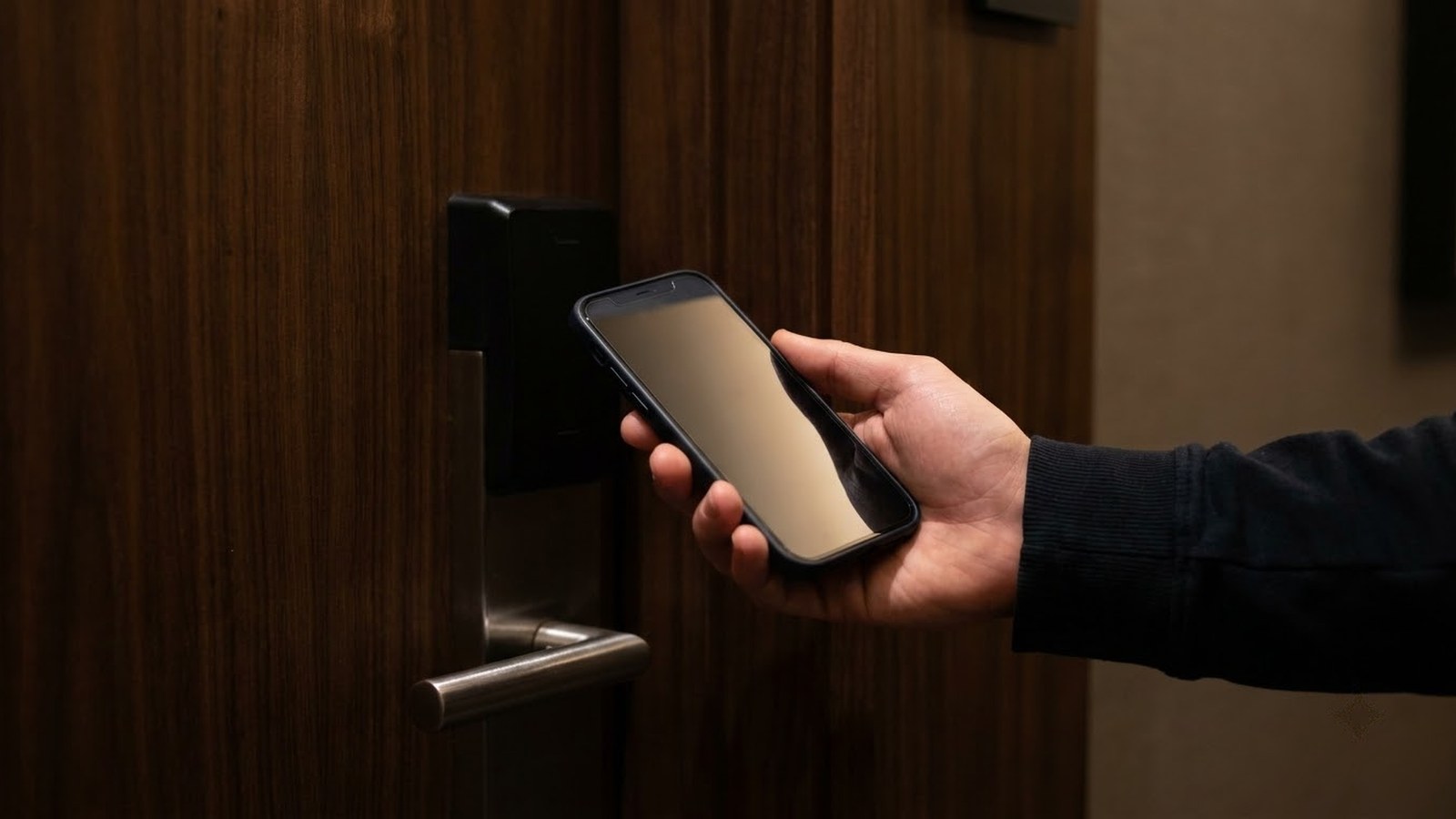
- After booking, the guest receives a pre-arrival check-in link by email or in the confirmation message.
- The guest photographs their ID; the system extracts the details and matches them against the hotel's property management system.
- The guest signs the terms on screen.
- The system issues a door code for the right room and the exact length of the stay, and sends it over.
- On arrival the guest goes straight up without stopping at the desk.
- At check-out the guest taps once; the code expires and housekeeping picks up the job immediately.
On locks: this model runs with smart locks that allow time-limited codes to be issued from outside. Which lock you already have determines how much integration work there is, so it is a question to answer before talking about features.
Layer 2 — Taking bookings on messaging
- The assistant sits on the messaging apps guests already use and answers outside office hours too.
- When a guest asks about availability, the assistant reads live room status from the property management system.
- The assistant suggests a room type, shows photos, and explains what separates one category from another.
- When the guest agrees, the system creates the booking, sends a payment link, and confirms back.
- Automatic reminders ahead of arrival, with the check-in link and directions.
- A returning guest is recognised, and their previous room type is offered rather than asked about again.
This layer is also where the three properties meet: which property a guest stayed at, and in which category, all sits in one record.
Step 3
Boundaries to hold
This part matters as much as the features, because it decides whether the model works inside your contracts and the rules that apply to you.
- Rate parity clauses with booking channels. Many contracts bar a hotel from publishing a direct rate below the rate on that channel. How binding this is varies by contract and by market, so read your own contract before publishing any discount.
- How to compete without touching parity. Instead of cutting the published rate, most hotels add value for direct bookers: breakfast, late check-out, an upgrade when one is free, or a returning-guest benefit. These usually sit outside the clause — but confirm it with your partner anyway.
- ID photographs are personal data. Tell guests what you use them for, keep them only as long as you need them and then delete them, and restrict who can view them. Vietnam's personal data protection rules have changed across several instruments, so check against the one currently in force.
- Door codes must expire on time. This is the thing to test hardest at sign-off: a code still alive after check-out is a security hole, not a convenience.
- There still has to be a way to reach a person. A guest who cannot work the flow, documents that do not match, a lock that will not open — all three need a phone number where somebody really answers.
Step 4
Operating targets
Each target is tied to a specific mechanism above, so it can be checked. These are thresholds set at design time, not measurements taken after go-live.
- Check-in under ninety seconds. Because the slowest part — photographing and matching documents — was already done before the guest arrived.
- The night shift can go. Because guests enter with a code and nobody has to hand over a key. Keep someone on the phone remotely for the exceptions.
- More direct bookings. Because somebody answers at the moment the guest asks, even at midnight, instead of leaving the message until morning.
- Commission falls with it. This is a consequence of the point above, not a separate job: commission drops in proportion to how far the direct share rises.
- Returning guests are recognised. Because the guest record is shared across all three properties, so the second visit does not start from scratch.
One thing worth saying plainly: the two numbers about direct bookings and commission depend on how willing your guests are to leave the channel they know. For an international traveller coming to Vietnam for the first time, the intermediary is still where they look for a room. This model targets people who already know the hotel and people coming back — it does not replace the booking channels for reaching new guests.
About this model
A three-property boutique hotel group
Next step
Want to depend less on the booking channels?
A demo to review your current channel mix and the clauses in the contracts you already hold, then scope the first layer to roll out.