
End-to-end AI operations for a serviced apartment: from self check-in to self check-out
A 31-unit serviced apartment across two buildings, international guests arriving on flight time, and a front desk that only works until late afternoon. InCard builds three connected layers: guests check themselves in on their own phone, an AI assistant sits with each unit for the whole stay, and check-out reminders go out on the same channel the guest used to book.
Design targets
Four numbers the system is designed to hit.
These are the thresholds we design and sign off each layer against, not measurements taken after go-live. Every number is tied to a specific mechanism further down the page, so you can check it against your own operation.
The four figures above are design targets, not measured results. This page describes a solution model built for a serviced apartment, not a results report from a named client. When we have measured post-launch figures we are cleared to publish, we will update this page and state the measurement period.
The transformation journey
Three layers, one guest journey.
Step 1
The challenge
A serviced apartment does not run a 24/7 desk the way a hotel does, but guests still arrive on flight time. Most of them come through international booking channels; the rest book direct.
- The front desk works 7am–4pm. Outside that window, a late arrival either waits or calls the owner's personal number.
- A manual check-in takes 8–10 minutes. Match the booking, photograph the documents, write it in the book, hand over the key card — a wait at every step.
- A language barrier around every small request. Extra towels, a broken air conditioner, a question about tours — each one is another round of translation.
- Ancillary services depend on someone remembering to offer them. Tours, airport transfers and laundry only sell when a staff member brings them up, so most of the opportunity simply passes.
- Service payments leave no trail. Cash or a manual bank transfer, reconciled from memory at the end of the day.
- Check-out is not under control. A guest who leaves late without telling anyone breaks the housekeeping schedule and pushes back the next arrival.
Step 2
The solution
Three layers running in sequence on the same guest record, plus a task board so staff never have to guess what is waiting for them.
Layer 1 — Self check-in
- The guest scans a QR code in the lobby and opens a web app on their own phone. Nothing to install.
- The system matches the booking automatically against the property management system already in use.
- AI reads passports and ID documents to pull out the name, document number and nationality. For handwritten visas, the machine reads the printed part and a person enters the dates — that is where machines get it wrong most often.
- The guest signs the terms of stay right on the screen.
- The system points them to the key box and issues the code — nobody has to be standing there.
Layer 2 — The in-stay assistant
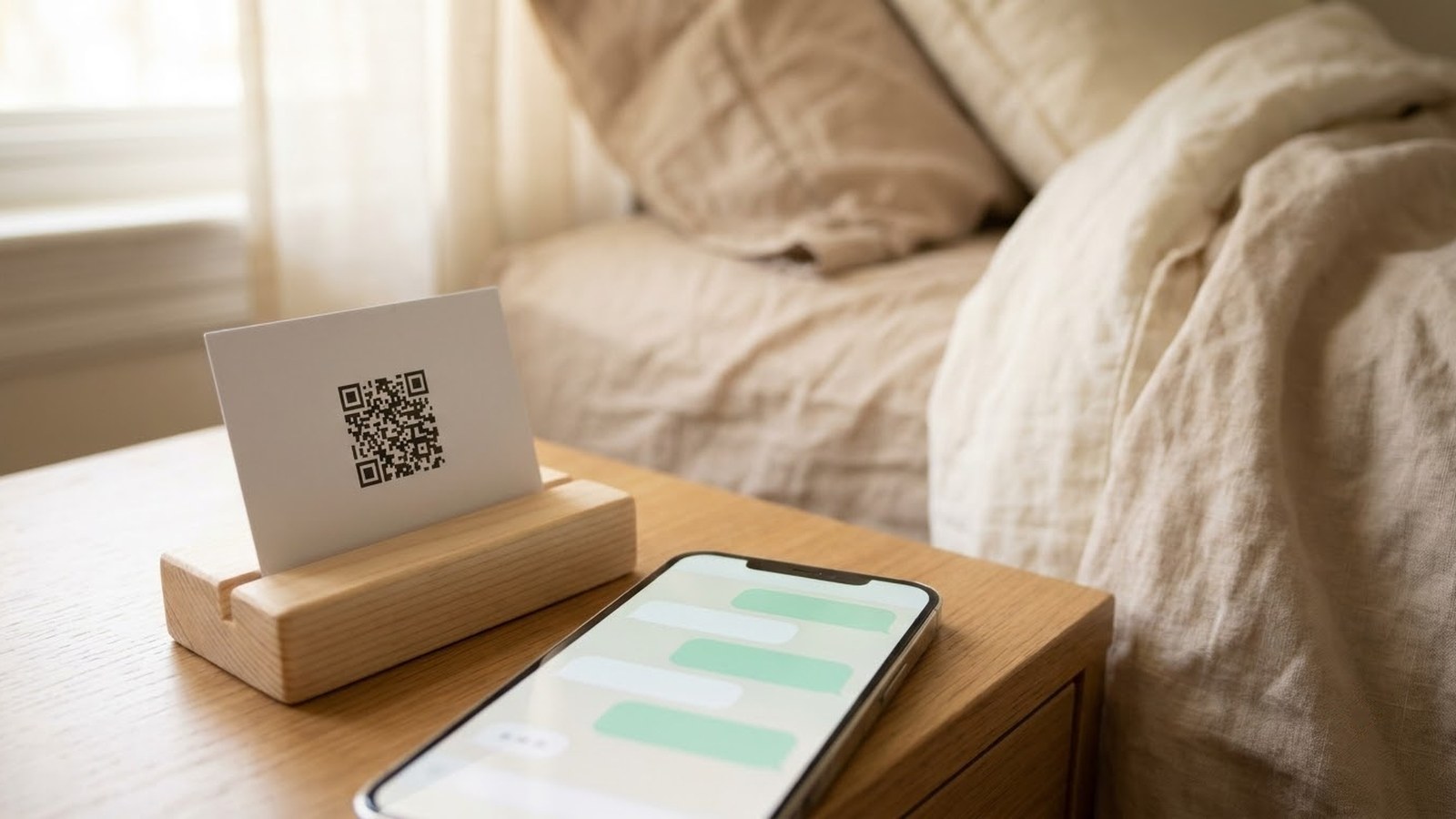
- A separate QR code per unit, so the guest never has to say which room they are in.
- The assistant sorts requests into three kinds: housekeeping, maintenance, and travel services.
- Each request becomes one work ticket and pings the department that owns it.
- For paid services: the assistant advises, the guest confirms, the system raises an order and generates a payment QR code; once it is paid, the order closes itself.
- Guests who would rather pay by card have a way out: a host brings a card terminal to the unit.
- Replies come back in the language the guest wrote in, so the language barrier disappears without hiring for it.
Layer 3 — Automated check-out
- A reminder one day ahead, then again on the morning of departure.
- If the guest wants a late check-out, the system checks availability, quotes the fee and waits for confirmation.
- When the guest leaves, housekeeping picks the job up immediately instead of waiting to be told.
- Reminders go out on the channel the guest actually arrived on: booking-channel guests get email, direct bookers get a message in the same app they already used.
The staff task board
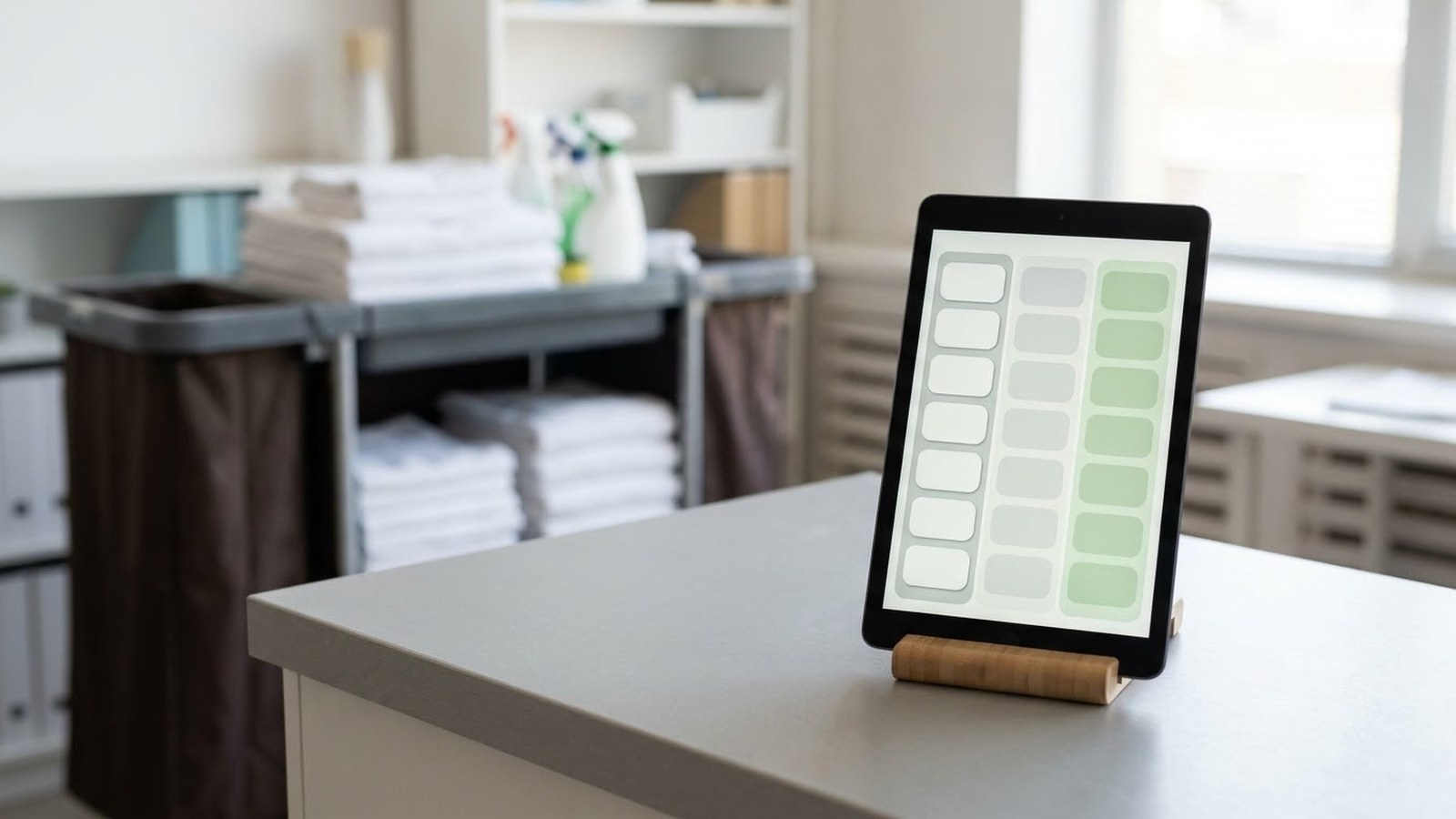
- Each request is a line with an owning department and a status; you tap to close it when it is done.
- Management reconciles money taken against orders in the property management system, instead of adding up a book at the end of the day.
Step 3
Operating targets
Each target below is tied to a mechanism above, so it can be checked rather than taken on faith. These are thresholds set at design time, not measurements taken after go-live.
- No after-hours cover needed. Because no step in the check-in flow requires a staff member — except when documents do not match, at which point the system stops and hands over to a person.
- A check-in in under two minutes. Because guests work in parallel on their own devices instead of queueing at one desk.
- Higher ancillary revenue. Because the offer appears at the moment the guest needs it, rather than depending on whether a staff member remembered.
- Nothing gets dropped. Because every request becomes a ticket with an owner, and an open ticket stays on the board.
- Service payments reconcile. Because every payment is attached to an order, instead of cash that leaves no trail.
- Check-outs closer to schedule. Because guests are reminded twice on a channel they actually read, and asking for a late departure has a proper route.
What the property has to prepare is worth stating plainly: pricing, hours and fee policy have to be written down first, because the assistant only applies what has been written. And you still need a human process behind the cases where documents do not match or a guest cannot work the flow.
About this model
A 31-unit serviced apartment
Next step
Want to build this flow at your property?
A demo to look at whichever part of the day costs you the most staff time, then scope the first layer to roll out. It usually pays to start with one layer, let it settle, and only then open the next.