Agentic AI Platform
Before, during and after the sale.One platform, not three tools.
AI agents run your social content, answer customers and handle after-sales care — on web, Zalo, Messenger and WhatsApp. The same data, the same conversation history, and always a handover to a real person.
Why one platform
The problem is not missing tools.It is three stages that never talk to each other.
Each stage runs on different software. The customer passes through all three; the data stops at the boundaries between them.
Before the sale
Leads fall through comments and inboxes
Slow replies, leads lost in comments and messages, patchy nurturing — nobody follows up with the people who showed interest.
During the sale
Different answers on every channel
Inconsistent advice across channels, missed windows when customers are free, and scheduling still done by hand.
After the sale
Contact stops once they have bought
Overloaded by repeat questions, no after-sales care, and by renewal time nobody remembers the customer.
Three stages · one platform
The same customer.The same conversation history.
The agent at each stage reads the same data and writes into the same customer record — so nobody has to start their story again moving from marketing to sales to support.
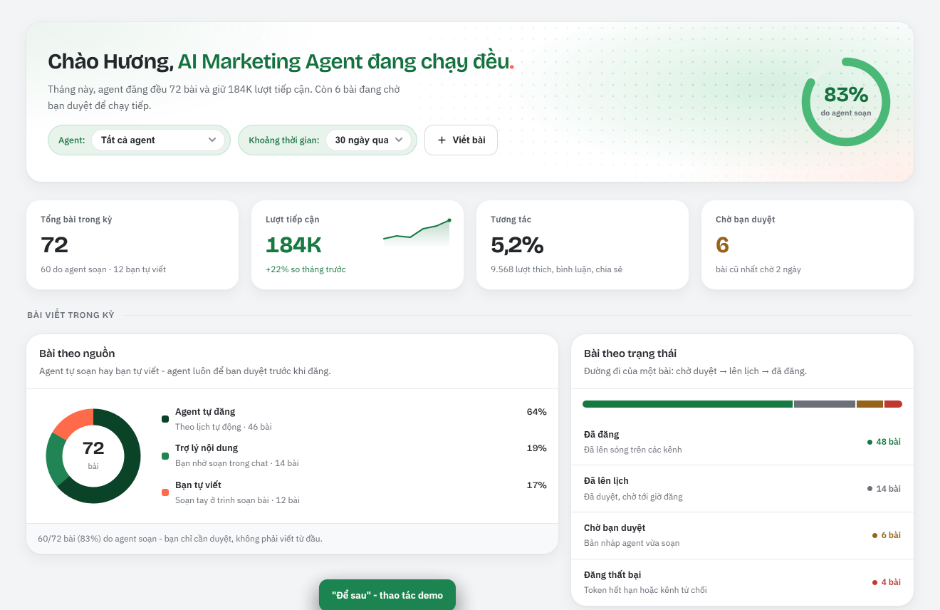
01 · Before the sale
Content goes out steadily, and leads stop falling through the comments.
The agent writes in the brand voice you set up, publishes on schedule to the channels you connected, then turns the people who engage into leads with contact details — instead of leaving comments sitting there.
- Writes in your brand voiceYou approve before anything goes live.
- Publishes on schedule across channelsFacebook, Instagram, LinkedIn, TikTok.
- Captures leads from comments and inboxesWith the source channel and what they asked.
- Reports reach and engagementPer post and per channel.
02 · During the sale
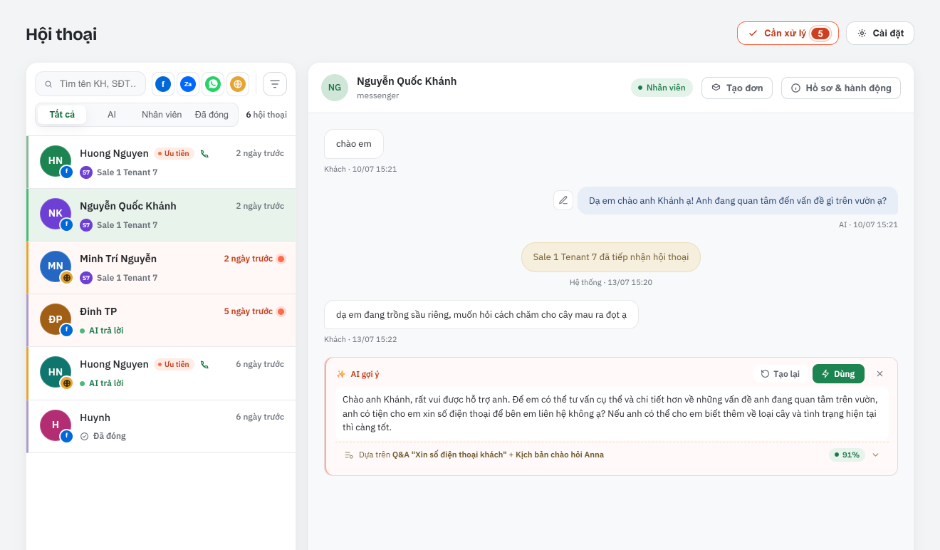
Answers immediately, and hands over to sales when a person is needed.
The agent advises from the documents and data you supply, qualifies against the criteria your company sets, helps book meetings — then passes the whole conversation context to sales.
- Advises from the data you supplyFAQs, documents, URLs or CRM fields.
- Qualifies before handing overAgainst criteria your company sets.
- Books meetings inside the conversationFrom the connected calendar’s free slots.
- Hands over to a real personSales receive the full conversation with it.
03 · After the sale
Quiet customers still get followed up, on the channel they actually use.
The agent answers repeat questions, routes requests that need a person, and follows up customers who stopped replying using the script you set — and you can switch it off at any time.
- Answers repeat questionsFrom approved documents; it does not invent answers.
- Follows up customers who went quietAfter a delay you set.
- Routes requests that need a personTo the team responsible.
- Collects after-sales feedbackSo you know what to improve.
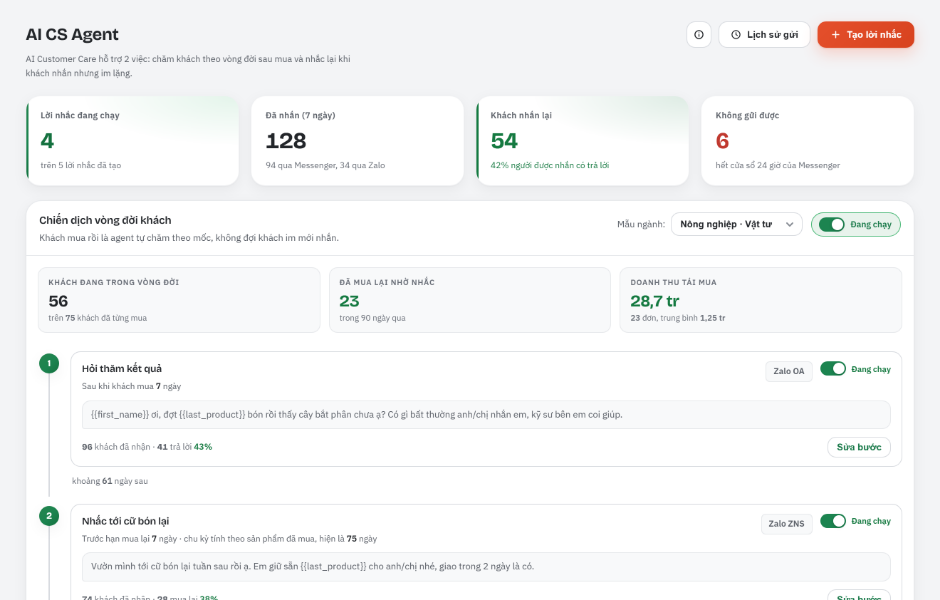
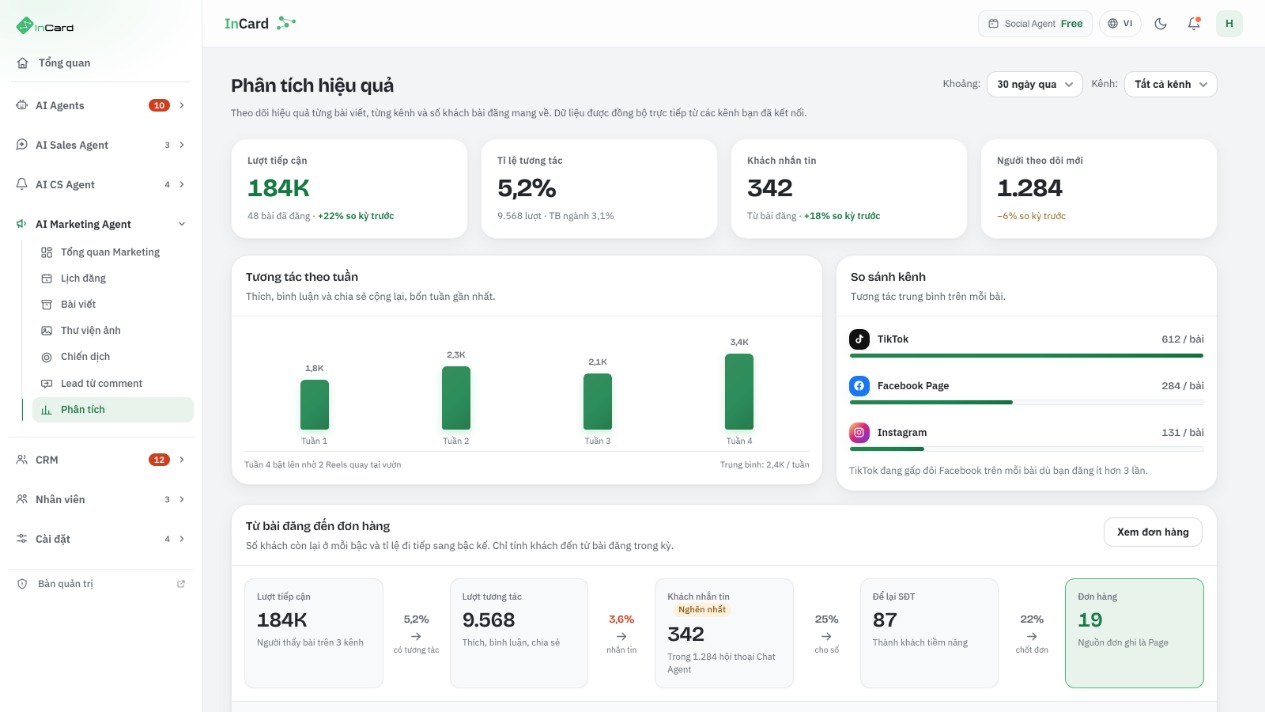
The whole journey, measured
Not just how many posts went out.See where customers stop.
Because all three stages sit on one platform, you can follow the thread from reach to conversation to the customer coming back — instead of three disconnected reports.
The figures above are read from a product screenshot with demo data, shown to illustrate what the platform measures — not a promise of results.
From reach to return
Measure the whole thread,
not just vanity metrics.
Each step shows where customers drop off — so you know whether to fix the content, the sales script or the after-sales care.
* Actual results depend on your industry, data quality, budget and how you deploy.
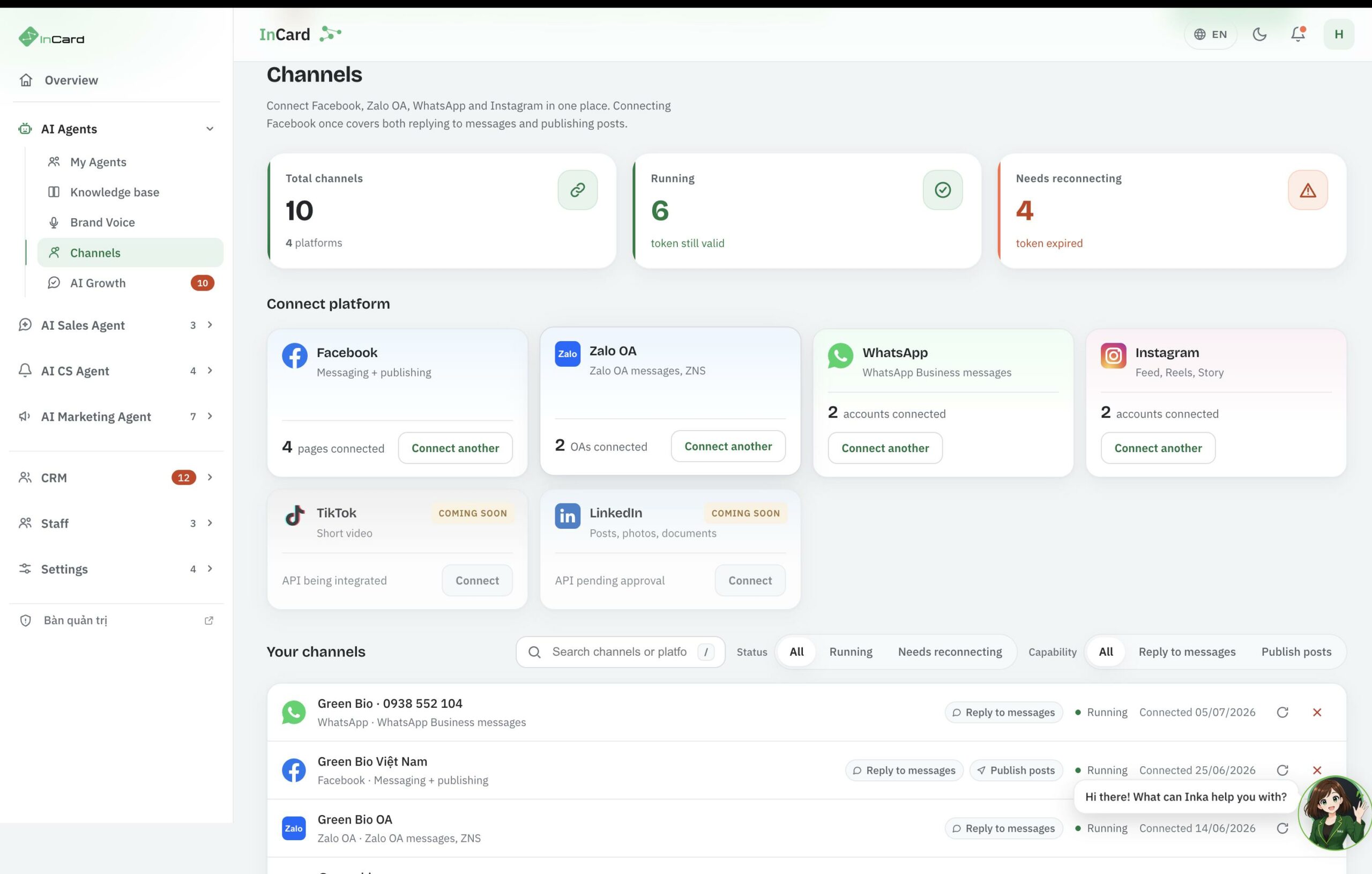
Channels and integrations
Connect once.Shared across all three stages.
Each channel only needs authorising once. How deep the connection goes depends on each platform’s API and permissions — so each level is stated explicitly here.
Social
Where the content is published and where the first comments appear.
- FacebookPublic API available
- InstagramPublic API available
- LinkedInNeeds technical assessment
- TikTokNeeds technical assessment
Messaging and web
Where the real conversation happens, in and out of hours.
- Web chatPublic API available
- Zalo OAPublic API available
- Messenger / Instagram DMNeeds technical assessment
- WhatsAppPublic API available
- TelegramNeeds technical assessment
- EmailPublic API available
CRM and systems
Where your customer data and calendars already live.
- HubSpotPublic API available
- ZohoPublic API available
- OdooNeeds technical assessment
- SalesforceOn the roadmap
- Calendar / BookingNeeds technical assessment
- Payment gatewaysNeeds technical assessment
Rollout and security
Start with one stage.Expand once it runs well.
You do not have to replace the whole system on day one. Usually it is best to pick the most painful stage, trial it, then connect the other two.
Rollout process
- Review and agree the goalAgree which stage comes first and which metric measures it.
- Connect data and channelsAuthorise each channel, load documents and FAQs for training.
- Build and testRun it in a sandbox before any real customer sees it.
- Go live and monitorWatch answer quality and the cases that need a human handover.
- Optimise regularlyRead the reports, fix the scripts, extend to the next stage.
Security and compliance
- Role-based accessRBAC — each person sees only what is in their scope.
- Access logAn audit log records who viewed and did what.
- Data encryptionIn transit and at rest.
- NDA / SLASecurity and service-level commitments in writing.
- GDPR · PDPA · Decree 13Compliance support for the market you deploy in.
- Choice of data residencyVietnam, Singapore or Australia — fixed in the agreement.
Product demo
Watch the platform work end to end
Eighty seconds across all three stages: an agent drafts and schedules a post, a buying-intent comment becomes a qualified lead with an owner, and the customer keeps being looked after once the sale is done.
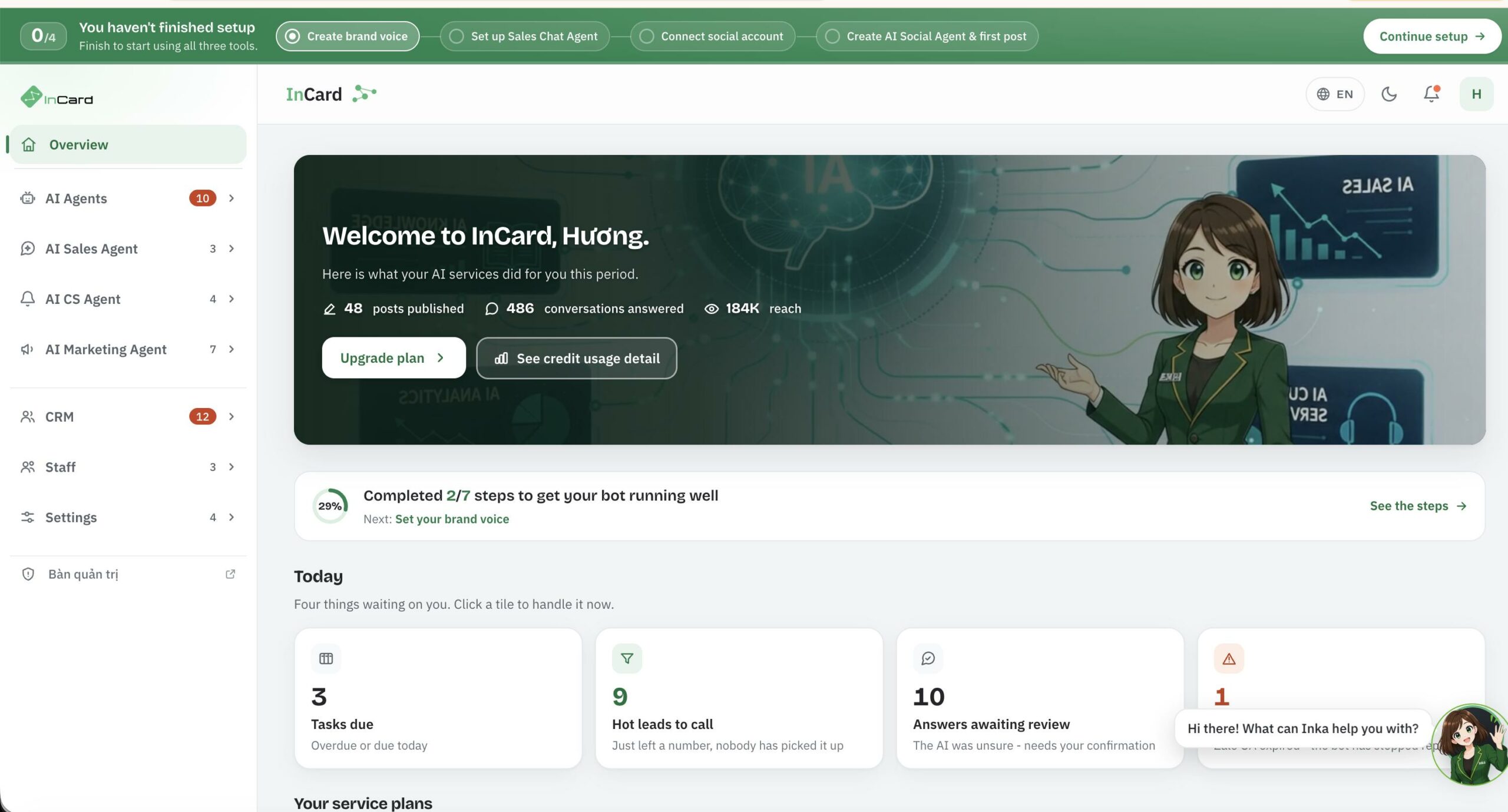
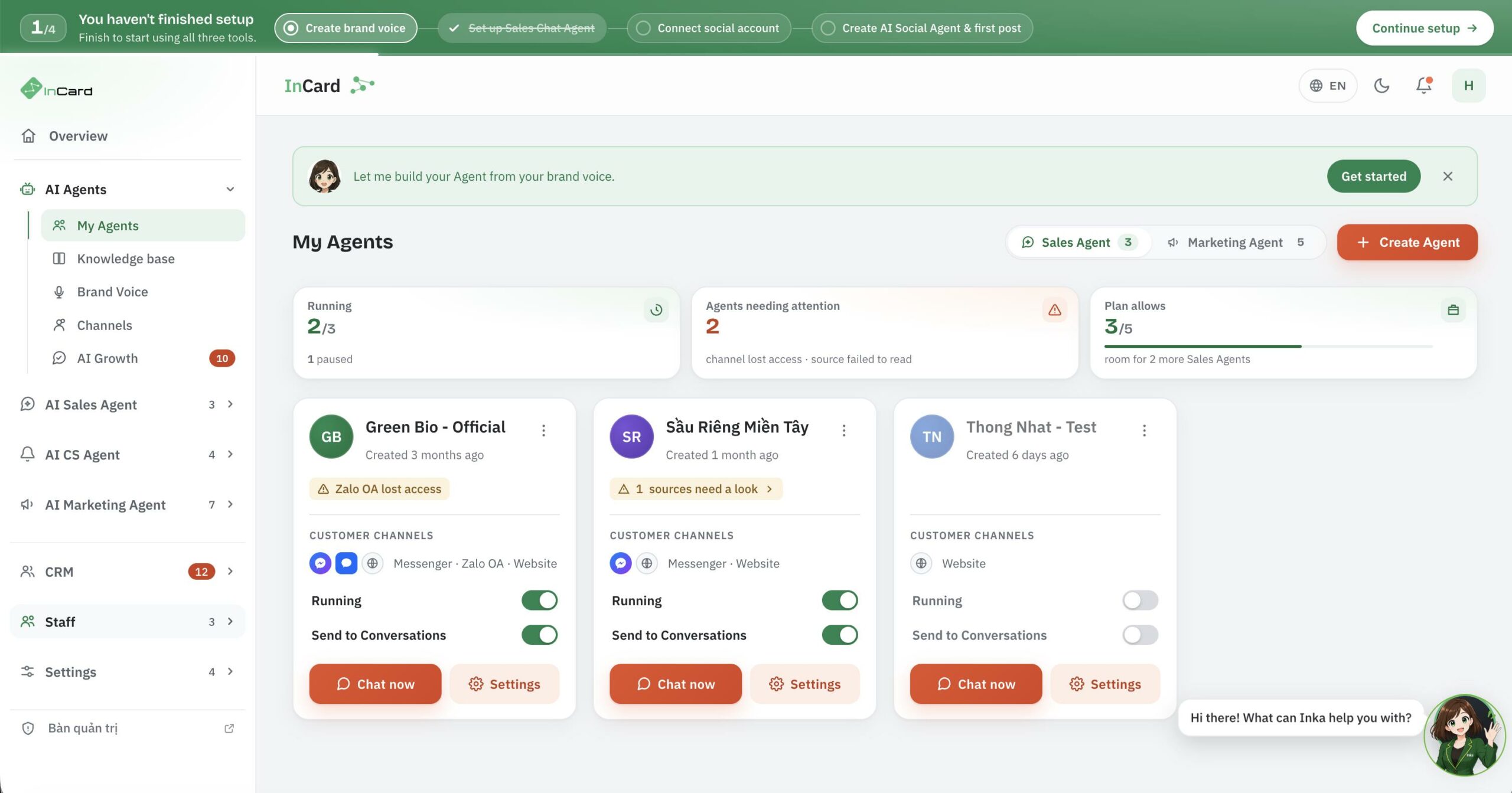
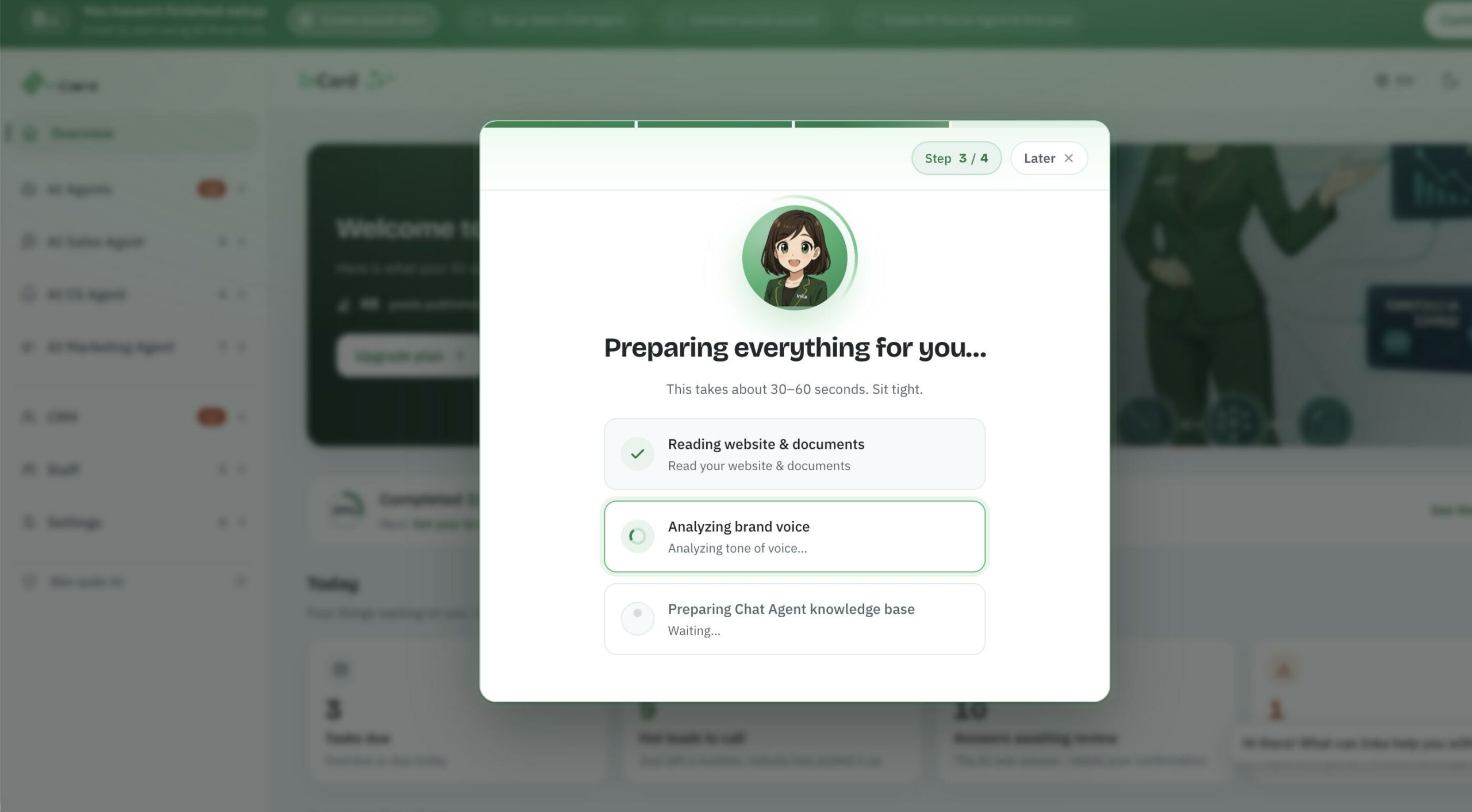
Product interface
What the platform looks like once it is running.
The four screens you will use most on the Agentic AI Platform.
The product has both a Vietnamese and an English interface — the screenshots below are from the English one.
Frequently asked questions
Before you connect all three stages.
What businesses usually want cleared up about how far automation goes, what data to prepare and how to expand step by step.
Next step
See the platform running on your own situation.
A demo to review your current customer journey, pick the stage to start with and work out what data to prepare.
-
A chatbot usually only handles the replying. This platform connects all three stages — social content, sales conversations and after-sales care — on the same customer data, with a handover to real people and reporting end to end.
The difference is in the joins, not in the answering. -
FAQs, product documentation, website URLs and CRM fields if you have them. It does not need to be perfect on day one: run the sandbox to test and fill gaps before any real customer sees it.
-
No. Most should start with the most painful stage, measure for a few weeks, then connect the next one. The rest of the platform is already there, so expanding does not mean starting over.
-
No. Posts go through approval before publishing, the sales scripts are yours, and there is always a handover rule to a real person. You can switch the automation off at any time without losing the data already collected.
There is always an approval step and a handover to a real person. -
HubSpot and Zoho have public APIs, so they are the clearest path. Odoo, calendar/booking tools and payment gateways need assessing against the version you run. Salesforce is on the roadmap. Final scope is agreed after a technical review.
-
Supply the training data, approve the scripts and test before go-live. InCard does the configuration and metric tracking with you — but content approval and sales decisions stay with your team.