
Owner-run homestay: opening a second house without hiring anyone
Two homestays, twenty-six rooms, and no staff on duty. Everything — answering enquiries, issuing door codes — ran through the owner's personal phone. InCard builds one continuous chain: the guest asks on messaging, the system creates the booking, issues a door code for the exact length of the stay and sends it with the instructions — and the owner just reviews it all on one board.
Design targets
Four numbers the system is designed to hit.
These are design and sign-off thresholds, not measurements taken after go-live. For an owner-run property the number that matters is not revenue — it is how many things you have to do with your own hands every day.
The four figures above are design targets, not measured results. This page describes a solution model built for a small owner-run homestay, not a results report from a named client. When we have measured post-launch figures we are cleared to publish, we will update this page and state the measurement period.
The transformation journey
From one person on duty to a chain that runs itself.
Step 1
The challenge
A small homestay has no organisation behind it. The owner is the inbox, the front desk and the person who hands out door codes. That works with one house and breaks the day a second one opens.
- Every booking is retyped into the software by hand. Running two houses at once makes that retyping both slow and easy to get wrong.
- Door codes are created by hand and texted over. The lock and the booking software do not talk to each other, so every guest means the same sequence of steps again.
- All advice goes through the owner's personal messaging account. Which means being on duty day and night, and messages arriving at a busy moment simply get dropped.
- There is no standard check-in. The guest arrives, the owner comes out with the code and explains things verbally — differently each time.
- A second house is about to open. Keeping the manual approach means either hiring or letting service quality slip.
- The owner wants to match guests against ID for peace of mind, but has no way to do it beyond looking.
Step 2
The solution
Three links forming one chain. What separates this from bolting together separate tools is that data flows straight from one end to the other, with nobody copying it across in the middle.
Link 1 — Enquiry and booking inside the conversation
- The assistant sits on messaging apps and on the website, in place of the owner's personal account.
- The guest names their dates, the assistant reads live availability from the booking software and comes back with room types, photos and the price for those exact dates.
- When the guest agrees the system creates the booking itself and sends a payment link. Nobody retypes anything.
Link 2 — Door codes issued automatically on confirmation
- Once the booking is confirmed the system issues a door code limited to that guest's exact stay.
- The guest receives the code, directions and house rules in one message.
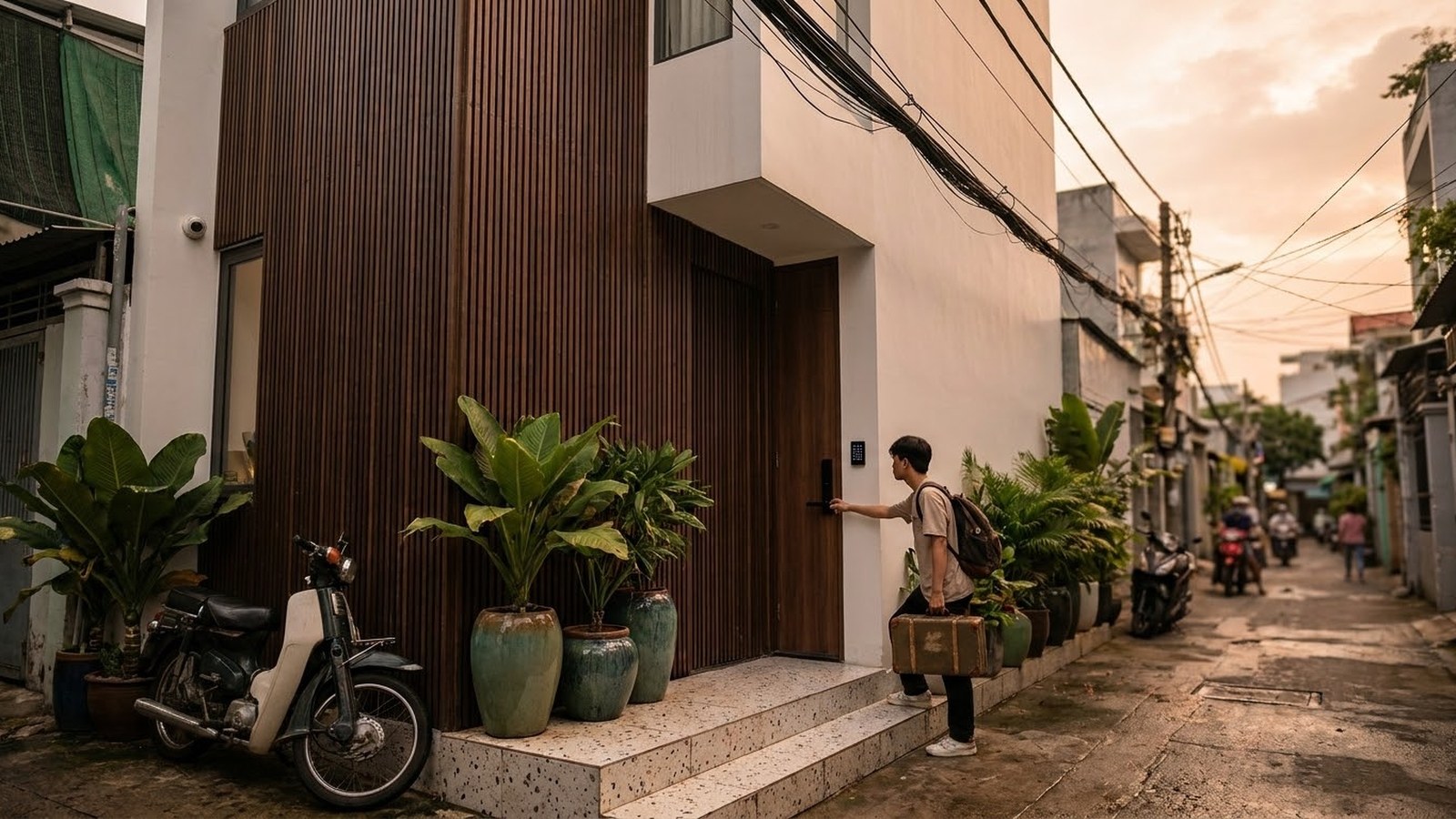
- On arrival the guest lets themselves in without arranging to meet the owner.
- Before check-in the guest sends a photo of their ID so it can be matched against the booking.
Link 3 — In-stay, check-out, and one board
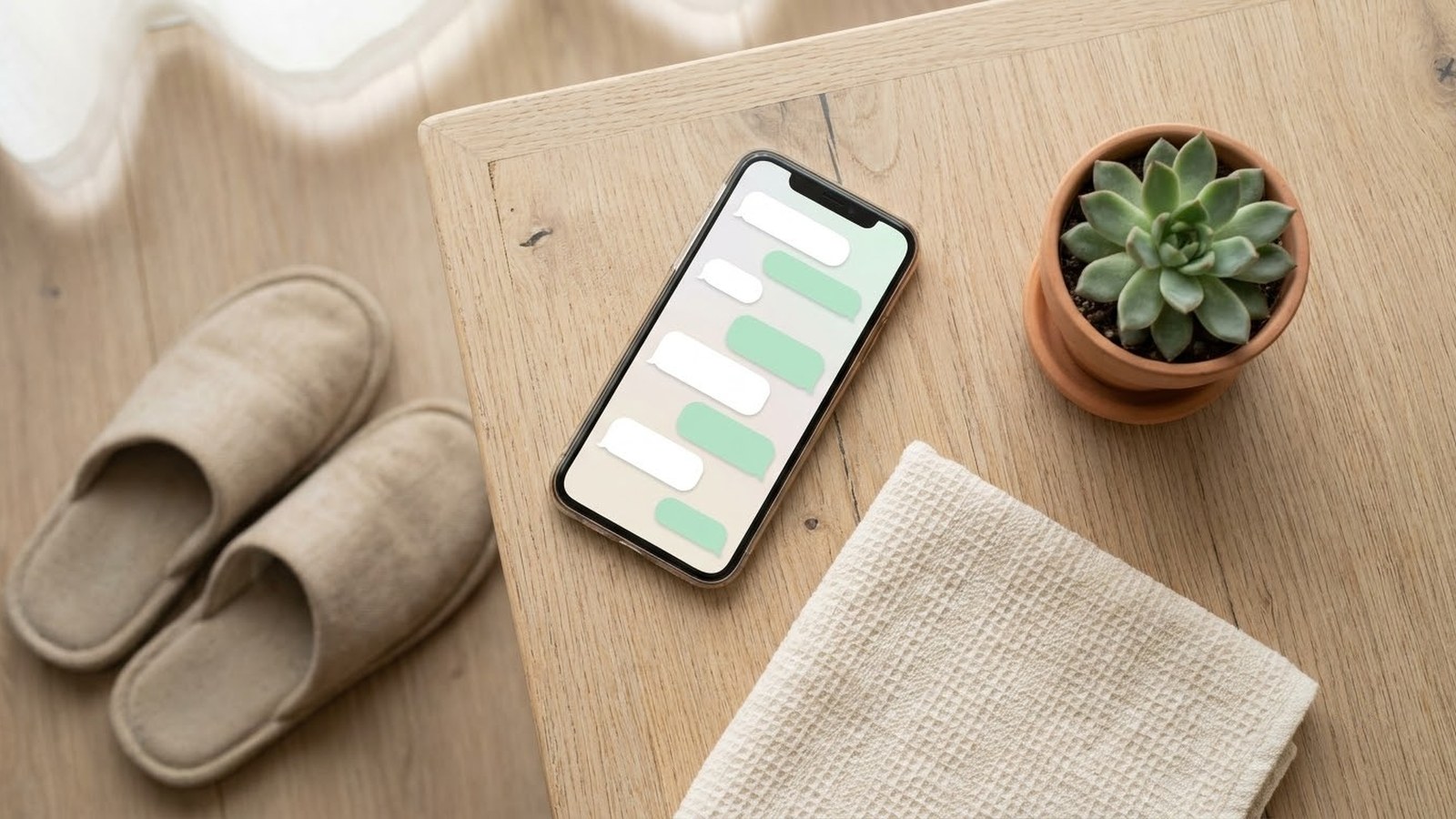
- The assistant handles the recurring questions: wifi password, where to park, places to eat nearby, extra services.
- A check-out reminder ahead of departure; once the guest confirms, the code expires and the cleaning job is created.
- One board for both houses: bookings, check-in status, jobs to do — instead of two message threads sitting apart.
This chain is also why the second house could open without hiring: another house is more data on the same board, not another organisation to build.

Step 3
Boundaries to hold
At a property with nobody on duty, every small failure becomes a large one, because there is no one standing there to fix it. These five have to be settled before you go live.
- ID photographs are personal data. Tell guests what they are used for, ask consent, keep them only as long as necessary and then delete them, and limit who can see them. Vietnam's personal data protection rules have changed across several instruments, so check against the one in force — or ask someone qualified.
- Matching an ID does not discharge your guest-registration duty. Registering guest details with the authorities, particularly for foreign nationals, remains the property's responsibility. The system prepares the data; it does not file it for you.
- A flat battery needs a plan. For an unstaffed property this is the most realistic risk there is. You need a battery replacement schedule, low-battery alerts, and a backup way in.
- Power cuts and network outages. Door codes should keep working even while the lock is temporarily offline, and the guest must always have a phone number that reaches a person.
- Not every guest can work the flow. Older guests, guests unfamiliar with apps, and guests arriving exhausted from a long flight all need a simple way out.
Step 4
Operating targets
Each target is tied to one of the links above, so it can be checked. These are thresholds set at design time, not measurements taken after go-live.
- The door code reaches the guest in under a minute. Because issuing it is triggered by the booking confirmation itself, not by somebody pressing a button.
- Most of the owner's repetitive work disappears. Because the three most time-consuming jobs — entering the booking, creating the code, sending the instructions — all sit inside the automated chain.
- Both houses on one board. Because data from both lands in the same place from the moment the guest asks.
- A guest can check in without anyone coming to open the door. Under normal conditions. The exceptions above still need a person, which is why keeping a phone line staffed matters.
One honest word about the automation figure: no chain runs correctly in every case. Failed payments, an ID that does not match the booker, a lock that will not respond — all three will happen. The sensible goal is not to eliminate human involvement entirely, but to move it to the moments that genuinely need it, instead of every single arrival.
About this model
Homestay, 2 houses, 26 rooms
Next step
Want to open another property without hiring?
A demo to count up what you currently do by hand every day, then work out which link to automate first.